Cold Hands: Natural Causes & Warm-Up Remedies

Cold hands are familiar to anyone who has stepped out into a winter wind, held a cold drink, or spent an afternoon beside a drafty window. Most of the time, the explanation is simple: your body is trying to hold on to heat. But repeated numbness, pain, or changes in finger color deserve a closer look.
Why Do Hands Get Cold?
When the temperature falls, blood vessels near the skin narrow to help your body conserve heat. Fingers have a large exposed surface area, so they can cool quickly. Feeling cold after a walk is different from having repeated episodes of unusually pale, blue, or painful fingers.
One possible explanation for recurrent attacks is Raynaud's phenomenon, in which small blood vessels react strongly to cold or emotional stress. Fingers may turn white or blue and feel numb before becoming red or tingly as they warm. Other health conditions and some medicines can also contribute to cold-hand symptoms. A clinician can help distinguish everyday cold sensitivity from an issue requiring treatment. [1]
Simple Ways to Warm Your Hands
For ordinary cold hands, start with gentle, practical steps rather than an extreme change in temperature:
- Move somewhere warmer. Get out of the wind and let your whole body warm up.
- Warm your core. An extra layer around your torso can be as useful as another accessory on your hands.
- Move your fingers. Open and close your hands gently, or take a short walk if you can.
- Use comfortably warm water. Choose warm, never hot, water; numb fingers may judge temperature poorly.
- Dress for the conditions. Mittens, a hand muff, and wind protection help reduce further heat loss.
These measures are consistent with advice from Mayo Clinic and the NHS for managing cold-triggered Raynaud's symptoms. Keeping warm, exercising regularly, and managing stress can also help some people reduce attacks. [2] [3]
What About Contrast Baths, Supplements, and Medication?
Not every remedy found online is suitable for every pair of hands. Alternating hot and cold water is sometimes used in supervised hand therapy, but it is not a general recommendation for cold sensitivity. If you have Raynaud's phenomenon, reduced sensation, or a circulation problem, ask a healthcare professional before trying contrast bathing. [4]
A balanced diet supports general health, but supplements such as iron or fish oil should not be presented as a universal fix for cold fingers. Iron is appropriate when a clinician identifies a need for it. Likewise, treatment for Raynaud's depends on its severity and cause. A doctor may prescribe a medicine such as nifedipine when needed. Some other medicines, including certain beta-blockers, can aggravate symptoms; medication changes belong in a conversation with your prescriber. [2] [3]
Everyday Warmth: What Different Options Actually Do
A useful comparison separates insulation, added heat, tactile comfort, and medical care. These are different purposes, not competing clinical treatments; none of the consumer accessories below is a treatment for a circulation disorder.
| Option | Main purpose | Useful setting | Keep in mind |
|---|---|---|---|
| Insulated mittens or a hand muff | Help reduce heat loss | Walking and commuting in cold weather | Choose suitable coverage for the temperature and wind |
| Reusable or electric hand warmer | Add a separate source of heat | Outdoor breaks and cold journeys | Follow product instructions; protect skin from excessive heat |
| Gentle movement and warming indoors | Help you get comfortable after cold exposure | Home, office, or a break from outdoors | Use warm rather than hot water, especially if fingers are numb |
| Beaver-fur Warming Pompom™ | Soft tactile comfort on a small area of the hand | Quiet moments, desk work, everyday use | It does not generate heat, replace gloves, or treat poor circulation |
| Medical evaluation | Identify causes of repeated or troubling symptoms | Pain, color changes, worsening or one-sided symptoms | Advice and treatment depend on the individual |
Why We Made a Beaver-Fur Finger Warmer
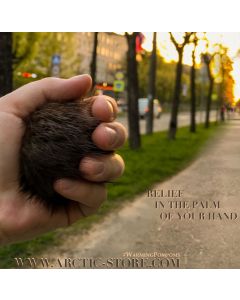
In our workshop, larger pieces of fur become hats, collars, and winter accessories. Smaller fragments can still be too good to discard. One way we use surplus beaver fur is in a little finger-worn accessory we call the Warming Pompom™.
It slips over a finger on a soft elastic loop. The loop should sit comfortably without pressure; remove it if it feels tight or causes discomfort or a change in finger color. You can turn the fur toward the palm or wear it outward, enjoying its texture while keeping most of the hand free. The appeal is simple: a small object that feels soft and pleasant to handle. Some people enjoy repetitive tactile gestures; others may prefer a smooth stone, fabric, or nothing at all. That personal preference is not a medical effect.
Natural fur offers a soft surface and some local insulation, but a finger pompom is not a treatment for Raynaud's phenomenon, a proven way to increase circulation, or a substitute for winter mittens. We would rather describe what it actually is than promise what it cannot demonstrate.
Explore the Beaver Fur Warming Pompom™, or see our fur mittens and hand muffs for more substantial cold-weather coverage.
When Cold Hands Need Medical Attention
Arrange a medical review if symptoms are frequent, worsening, painful, or interfere with daily life, particularly if you notice color changes, skin sores, or symptoms affecting only one side. Sudden severe pain or persistent loss of color or sensation requires prompt medical attention. Keep a note of the weather, stress, and activities associated with episodes; that information can help your clinician. [1] [3]
A Practical Conclusion
Warm clothing, a warmer environment, and gentle movement are sensible starting points for everyday cold hands. Repeated or painful episodes call for a medical explanation rather than another shopping recommendation. And for the quieter moments between the two, a well-made accessory can offer something simpler: texture, craftsmanship, and a little everyday comfort.
References
- National Institute of Arthritis and Musculoskeletal and Skin Diseases (NIAMS), National Institutes of Health. Raynaud's Phenomenon: Symptoms, Types, and Causes.
- Mayo Clinic. Raynaud's Disease: Diagnosis and Treatment.
- National Health Service (NHS). Raynaud's. Last reviewed July 20, 2023.
- Cambridge University Hospitals NHS Foundation Trust. Contrast Bathing for the Hand and Wrist.